
Resilience is a team skill, not only an individual trait.
Resilience has become an important topic in the workplace. In an environment characterized by constant change, uncertainty and increasing pressure, our ability to adapt, recover from setbacks and keep moving forward matters. But perhaps we have made resilience too individual.
Much of the conversation focuses on the individual: How can I become more resilient? How can I manage stress better? How can I deal with uncertainty? How quickly can I bounce back after a setback?
These are important questions and individual resilience matters. But organizations also need to ask another question:
How resilient are our teams?
Because a team made up of resilient individuals is not automatically a resilient team.
Think about what happens when a team comes under pressure. One person wants to act immediately. Another wants more information before making a decision. Someone becomes more direct. Someone else becomes quieter. One person wants to discuss the problem together, while another prefers to step back and think.
None of these responses is necessarily wrong. They are different ways of responding to pressure and uncertainty.
The difficulty begins when we interpret other people’s behavior through the lens of our own preferences.
Why is she taking so long to decide?
Why is he being so controlling?
Why isn’t she saying anything?
Why does he want to discuss everything? Can’t we just move forward?
Under pressure, these differences can become more pronounced. Communication deteriorates. Frustration increases. People make assumptions about one another’s intentions. And a group of individually resilient people can suddenly become a surprisingly fragile team.
Team resilience, therefore, is not simply the sum of individual resilience. It is also about how effectively people continue to work together when circumstances become difficult.
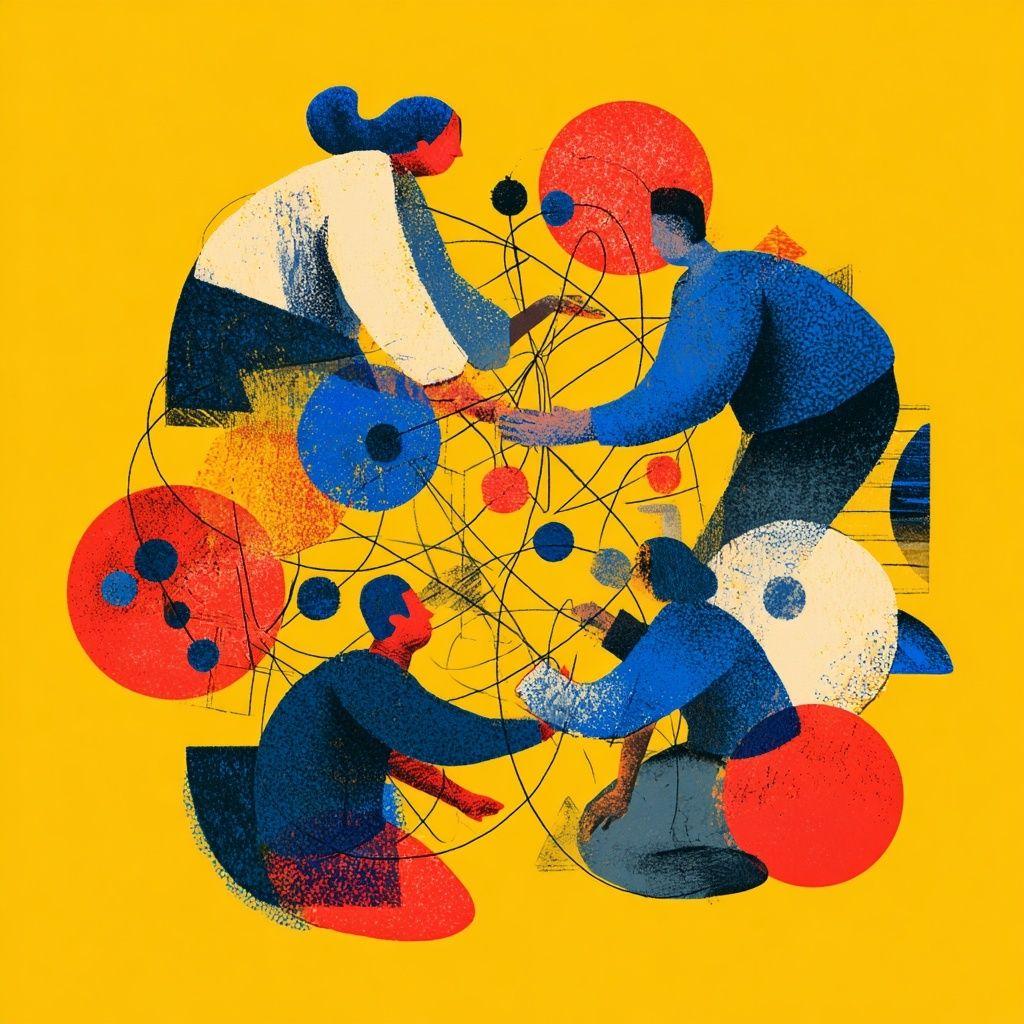
From resilience to Social Versatility
This is where Social Versatility becomes particularly relevant.
At Human Logic Academy, we define Social Versatility through three interconnected capabilities:
Self-Awareness + Empathy + Adaptability
Self-awareness helps us recognize our own behavioral patterns. How do I react when I am under pressure? Do I become more direct, impatient, cautious, quiet or emotional? And what impact might that have on the people around me?
Empathy allows us to look beyond our own perspective. Instead of immediately judging a colleague’s behavior, we become curious about what might be driving it. What does this person need? What might they be concerned about? Why might they be responding differently from me?
And then comes Adaptability: the ability to adjust our own behavior when the situation or the person in front of us requires something different. Adaptability does not mean becoming someone else. It means having enough behavioral flexibility to communicate and collaborate effectively with people who may think, decide and respond differently from us.
This becomes especially valuable when teams are under pressure.
A resilient team does not need everyone to react in the same way. In fact, different behavioral styles can become a strength. Someone may push the team toward action, while another identifies a risk that has been overlooked. Someone may generate alternatives, while another notices that the team is losing alignment.
Building resilience before you need it
Team resilience is not something we suddenly switch on when a crisis occurs. It develops through everyday interactions: how we communicate, how we disagree, how we respond to mistakes, how well we understand one another and how willing we are to adapt.
Leaders have an important role to play here. Asking people to “be more resilient” is not enough. Organizations need to create conditions in which teams can communicate openly, challenge assumptions, learn from mistakes and work constructively across behavioral differences.
Perhaps that is the shift organizations need to make: continue helping individuals develop resilience but start paying much more attention to the resilience of the relationships and teams around them.
Book recommendation:
For anyone interested in exploring the team environment behind resilience more deeply, we recommend Amy C. Edmondson’s The Fearless Organization: Creating Psychological Safety in the Workplace for Learning, Innovation, and Growth.
The Fearless Organization
Edmondson’s work on psychological safety adds an important dimension to the conversation. Teams need an environment in which people feel able to raise concerns, ask questions, acknowledge mistakes and challenge ideas without fear of humiliation.
Because when circumstances become difficult, a team’s ability to adapt depends not only on what its members know, but also on whether they are willing and able to speak, listen and learn from one another.
