
How to improve your empathy in the workplace.
Empathy is more than just a “nice to have” skill—it’s a leadership superpower. In today’s workplace, where collaboration, trust, and inclusion drive results, empathy allows us to connect authentically with colleagues, clients, and partners.
At Human Logic Academy™, empathy is at the heart of our training because it is one of the key capacities that makes social versatility possible. When combined with self-awareness and adaptability, empathy enables us to navigate different behavior styles, listen beyond words, and create an environment where people feel safe to contribute and grow.
And the good news is that empathy is not fixed. It’s not something you either have or don’t have. Like any muscle, it can be strengthened with intentional practice.
What empathy really means
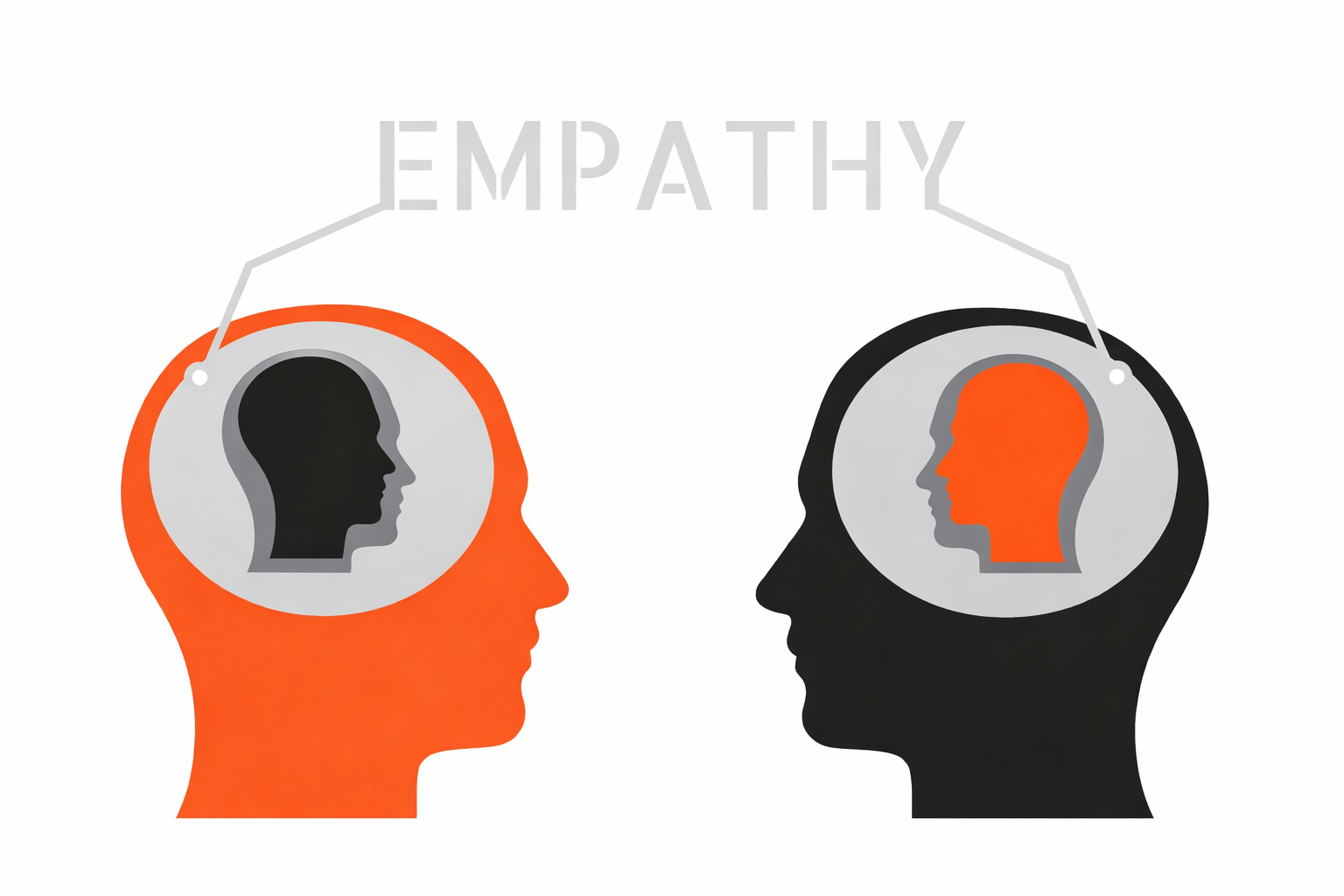
At its core, empathy is the ability to recognize, understand, and share the emotions of others—without judgment. It’s about putting yourself in someone else’s shoes, not to feel for them, but to feel with them. Psychologists often distinguish between three forms of empathy. Cognitive empathy helps us see things from another person’s perspective. Emotional empathy allows us to feel the emotions of those around us. Compassionate empathy goes one step further by turning that understanding into supportive action.
In the workplace, the balance of these dimensions is essential. It’s what helps us listen when a colleague is stressed, recognize unspoken concerns in a negotiation, or notice when a team member is disengaged before performance drops.
At Human Logic Academy™, we see empathy as one of the cornerstones of social versatility, together with self-awareness and adaptability. A Driver might learn to slow down and listen instead of rushing to results. An Analytical might soften their focus on facts by acknowledging emotions. An Expressive might learn to hold back and truly hear others. And an Amiable might practice voicing their own needs while continuing to support the team.
When empathy becomes part of the way we communicate, those differences stop being sources of friction and start becoming sources of strength.
Improving empathy begins with how we listen. Active listening means giving full attention, reflecting back what you’ve heard, and noticing not only words but also tone, body language, and energy. Simply resisting the urge to multitask during a conversation is a powerful first step.
Another way to strengthen empathy is to challenge unconscious bias. We all carry hidden mental shortcuts that can block us from seeing others clearly. Perhaps you favor people who are most like you (affinity bias), or you dismiss perspectives that don’t fit your beliefs (confirmation bias). By pausing when you feel a quick judgment rising, and asking yourself, “Could there be another perspective here?”, you open space for empathy to grow.
Nonviolent Communication (NVC) is another practical tool that helps transform empathy into action. Instead of reacting with blame or frustration, NVC invites us to share observations without judgment, express how we feel, articulate the need behind those feelings, and make respectful requests. Imagine telling a colleague, “In yesterday’s meeting, you spoke for a long time, and I felt overlooked. I need more space to share my ideas. Would you be open to giving me a few minutes next time?” This kind of conversation turns tension into collaboration.
Reflection also helps. Keeping an “empathy journal” where you note one moment you practiced empathy and one moment you missed the chance can sharpen your awareness over time. Small rituals—greeting colleagues by name, asking open-ended questions about how they feel, or pausing before reacting—gradually make empathy second nature.
Why it matters
Empathy is not weakness. It is strength. It builds trust, accelerates collaboration, and creates workplaces where people feel valued and motivated. At Human Logic Academy, we believe empathy is what makes social versatility possible. It allows us to adapt, connect, and lead with purpose.
By listening more deeply, questioning your own biases, practicing nonviolent communication, and reflecting daily, you can grow your empathy and make it part of your leadership DNA. The more empathy you bring to your workplace, the stronger and more human your impact will be.
